

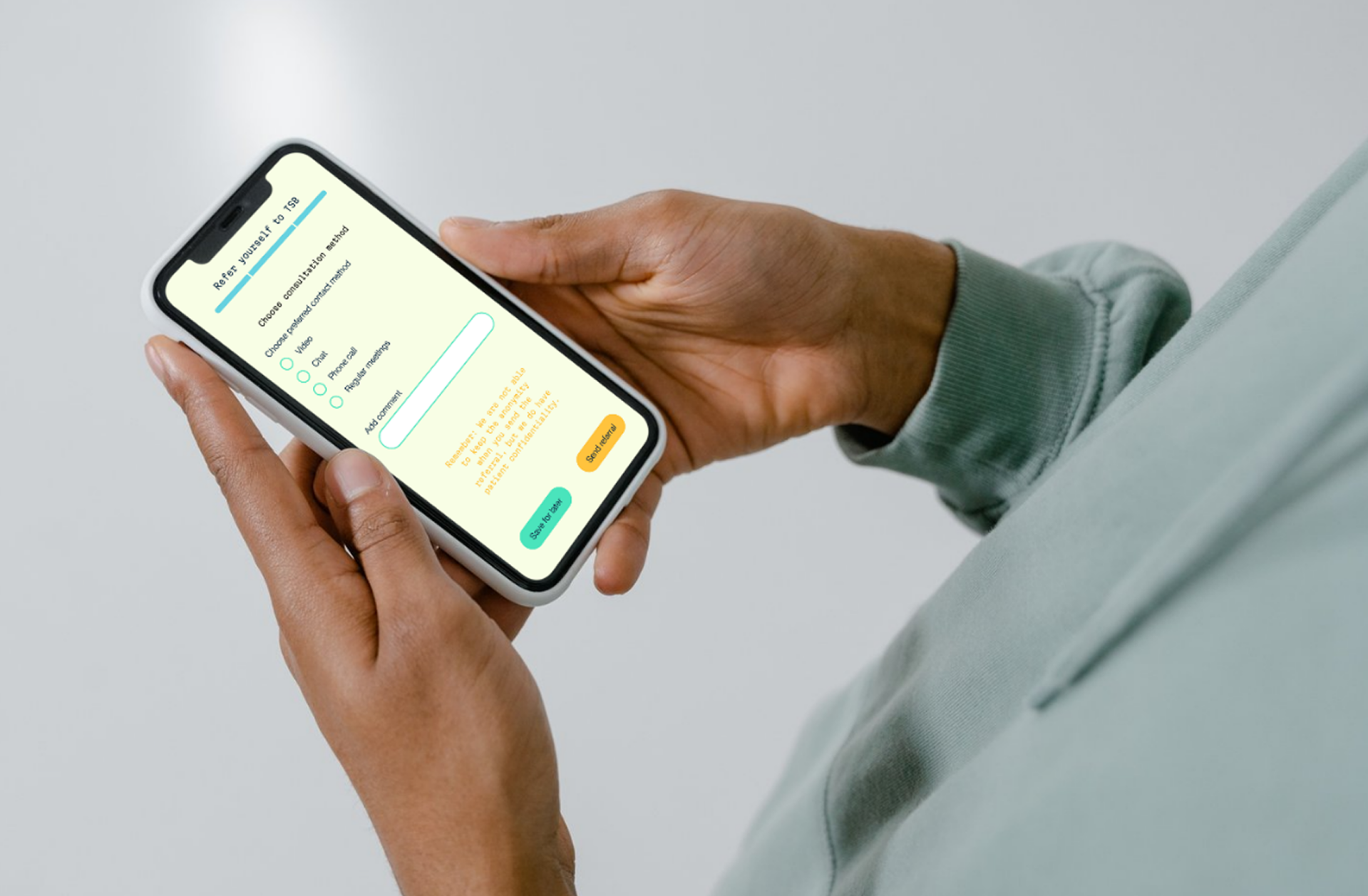
Digital clinic
Opening up for more entrences into modular treatment within Anabolic Androgenic Steroids.
Vilde Tubez Storfjell & Martine Braathen
Service design
2025 - Oslo Universitetssykehus
About
The project aimed to open up greater choice regarding different treatment modalities. It explored flexible service arenas, including options for video consultations, screening and assessment prior to treatment, as well as AI-supported referral and triage systems.
The target group consisted of AAS users, who often seek anonymity and prefer digital services. Many perceive their use as self-help rather than addiction. A significant number are employed full-time and may choose to quit on their own if support services are not available at the moment they feel ready for change. This highlights the importance of flexible and easily accessible support.
The project adopted a near-future perspective, grounded in the realities of the present and emerging possibilities, while also reflecting on recent developments. The methods applied included Three Horizons, trend cards, the Iceberg model, multiple roadmaps, narratives, desk research, artefacts, visualisations, and both traditional and future-oriented interviews.
The project was carried out over five weeks. My partner and I shared responsibilities equally, and I was specifically responsible for the illustrations and layout.
Insight and process
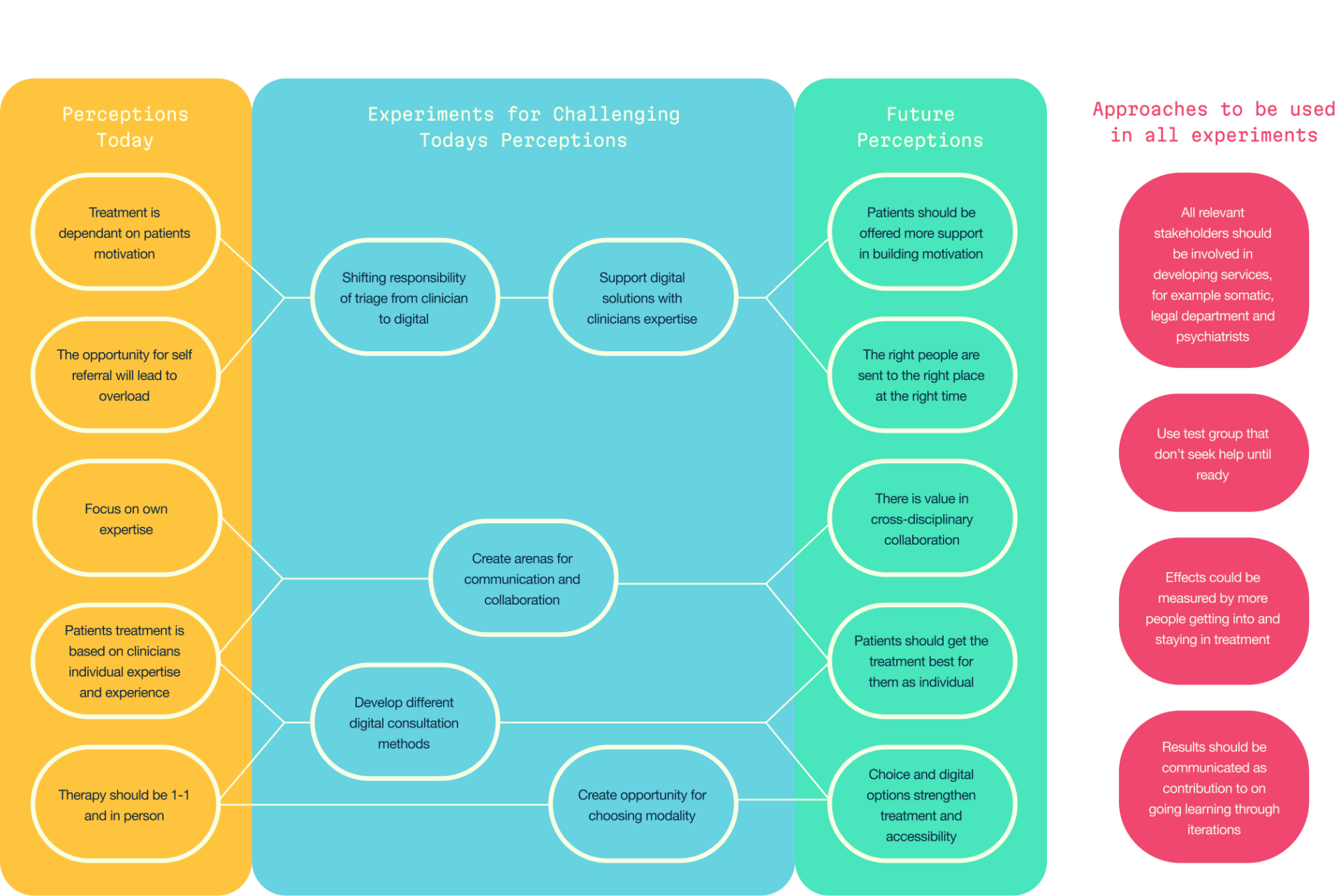
I used methods like the Three Horizons and roadmapping to capture insights and propose experiments that support reflection and development of the Digital Clinic. The roadmap highlights insights and suggests experiments to shift perceptions and support the Digital Clinic’s development.
User journey
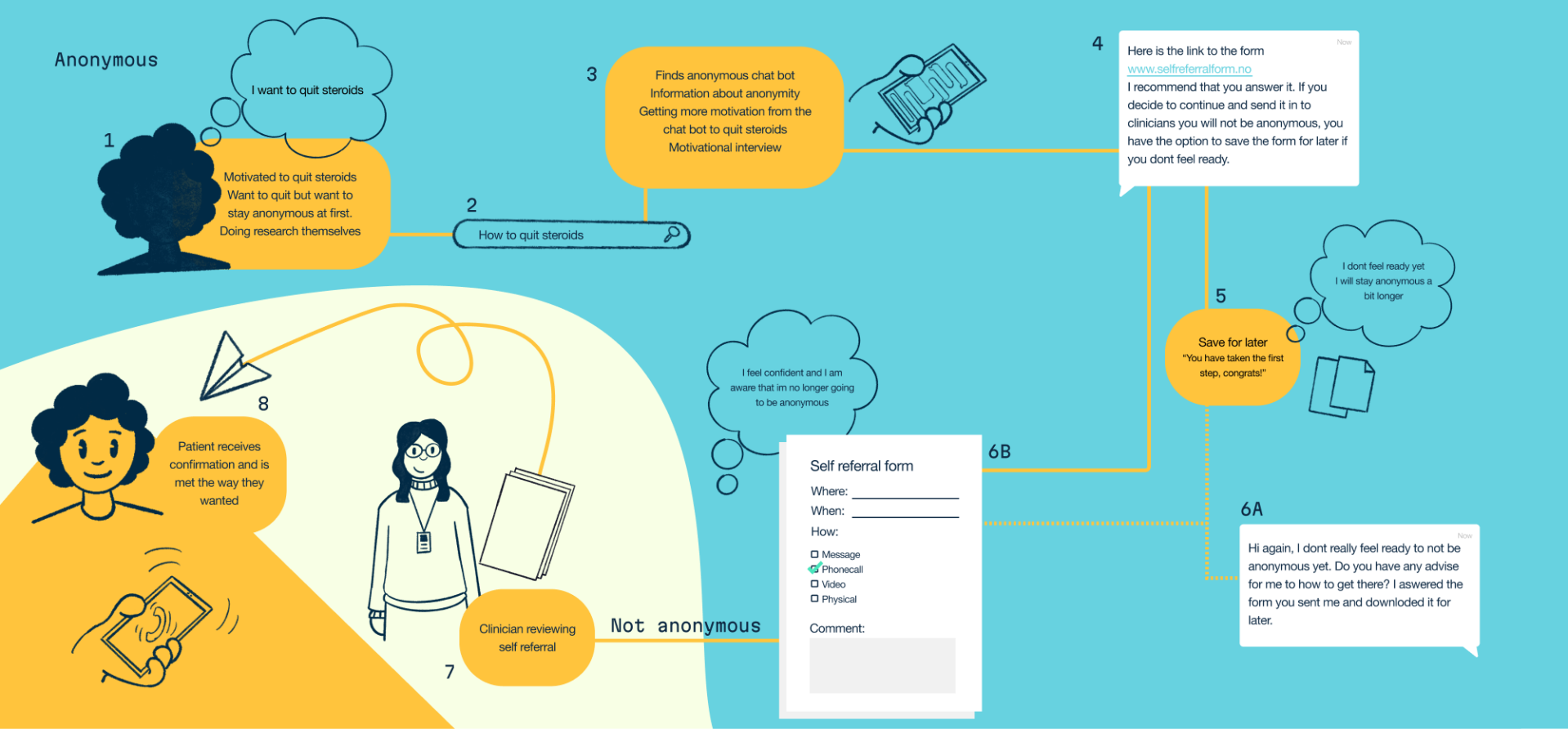
To visualise a potential development of the future digital clinic I propose a journey that takes you through the start-up of treatment for a patient using steroids. During our interviews, capturing the patient the second they think about quitting was highlighted as a critical moment. Therefore I wish to expand the information and guidance Steroidelab offers with a 24/7 Chat-bot and create more entries into treatment. The chat-bot will preform a motivational interview and give guidance accordingly. This is a way to distribute the knowledge of a few clinicians to many potential patients.
After a motivational chat the patient will receive the option of self referral into treatment, with a option to save for later if they don’t feel ready to break anonymity with the health care service. If this is the case, the patient can keep chatting with the bot for general advice and information.
If they wish to proceed they fill out the form, including how the wish to be met by the health care service. Where, what time and what modality the want for their screening. When this form is sent they are no longer anonymous as the referral must be reviewed by a clinician who confirms the appointment. Later the patient is contacted or met in the way they prefer and are most comfortable with.
The self referral form
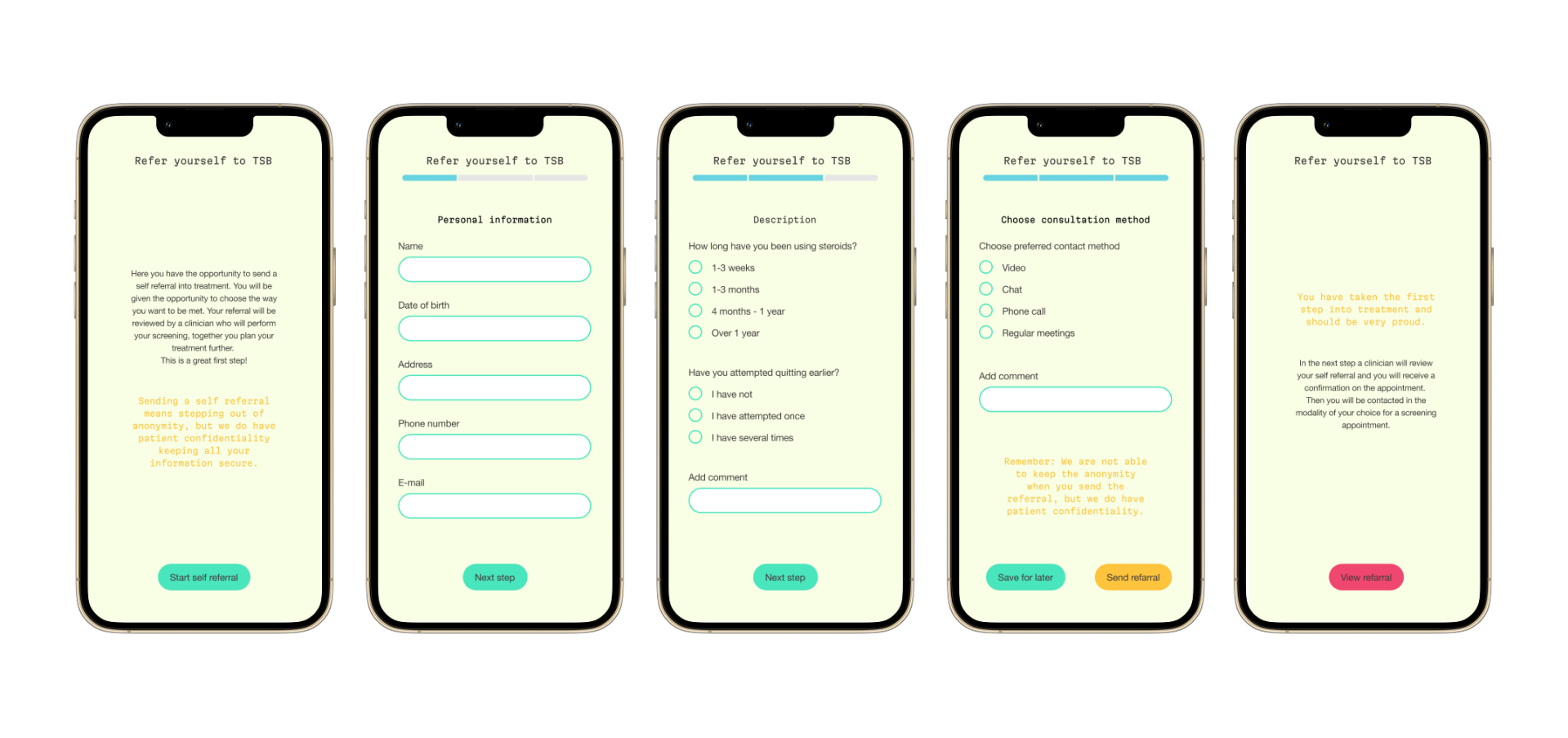
This is our example of how a self-referral form can appear on screen. First, you’ll receive information about the form and how your anonymity is handled. Next, you’ll enter your personal details and select your preferred consultation method. Finally, you’ll see a summary of your choices, including what happens to your data if you decide to submit the form. There is also an option to save your completed form and return to it later.


Address
Bjerregaards gate 21
Oslo, Norway
Socials