

Barnas beste
Protecting the rights of asylum-seeking children.
Andrea Smedsrud Gammelgård, Camilla T. Schei, Dina Louise Bugge & Martine Braathen
Service design
2025 - Norwegian Directorate of immigration UDI
About
In this project, we have examined how the best interests of unaccompanied minor asylum seekers (EMAs) are safeguarded in Norway, with a particular focus on youth aged 15-18. According to Article 3 of the Convention on the Rights of the Child, the best interests of the child should be a primary consideration in all actions affecting children, including EMAs.
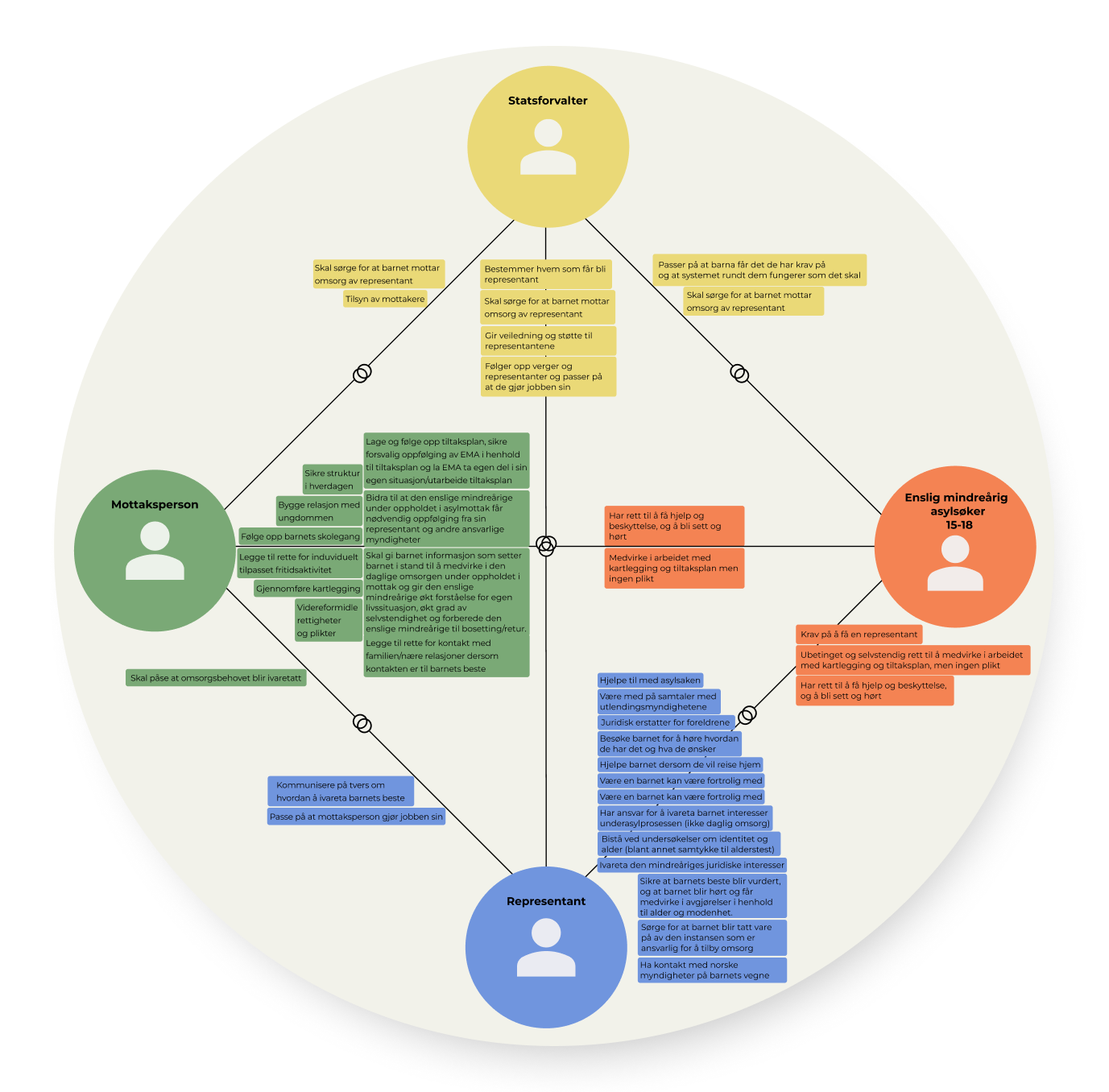
When an EMA arrives in Norway, they are assigned a representative from the County Governor. This representative acts as their legal guardian, ensuring that their rights and needs are followed up. In addition, EMAs live in reception centres where staff provide daily care and support, helping with school, leisure activities, and general structure in their everyday life.
Many of the actors involved in an EMA’s case have overlapping responsibilities, which can make it unclear who is ultimately accountable for what. Some representatives are very active, while others do very little. There are few systems for collaboration and limited information sharing. This leads to significant differences in how EMAs are supported, which can be confusing both for the professionals involved and for the youth themselves.
The asylum process can involve long and unpredictable waiting periods. For a young person navigating life without knowing what will happen next, this can be especially challenging. Better information and coordination during this period can make a significant difference and help ensure that the best interests of the child are upheld in practice. Importantly, we also aim to give EMAs greater insight into and ownership of their own asylum process. By including them in the flow of information and providing access to relevant details in an understandable way, we can strengthen their participation in a situation where much else feels uncertain.
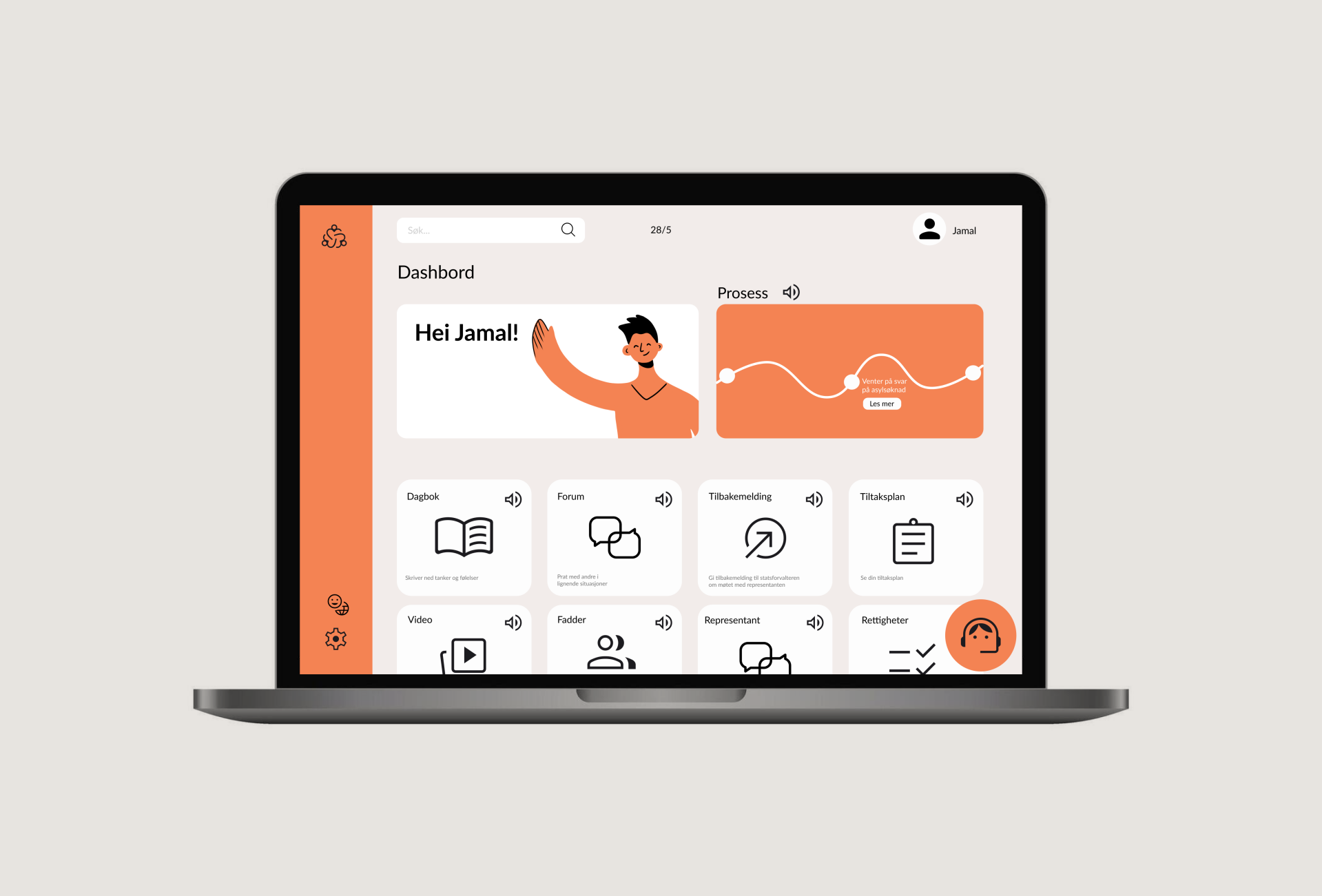
To address this, we created four dashboards illustrating four perspectives in an EMA’s asylum process: the EMA themselves, their legal representative, a reception centre staff member, and the County Governor. These dashboards show how a digital platform could be designed to facilitate collaboration and provide better oversight. The goal is both to make the work of professionals easier and to give EMAs a more informed and supportive experience in an otherwise difficult situation.
From "Jamal's" perspective
A fictional unaccompanied minor asylum seeker
Jamal is 16 years old and has come to Norway alone as an asylum seeker. He has fled unrest and violence, traveling for months before arriving. He has no family with him; no familiar faces. Everything is new: the climate, the language, the people. Yet Jamal is an active and curious boy. He wants to be part of the process, not just wait for answers, but participate in shaping his own future.
Upon arrival, he is assigned a representative, an adult whose role is to safeguard his interests and support him through the asylum process. Jamal is told that this is one of his rights; to have someone who protects him, helps him, and ensures he is seen and heard. He should be involved in assessing his needs and planning the next steps for his life.
But that is not how it feels for Jamal.
His representative seems very busy. They meet infrequently, and when they do, the conversations are short and impersonal. Jamal tries to ask questions about what will happen next, but often receives vague answers or is simply told he must wait. He has many thoughts, hopes, and concerns, but he does not feel that anyone is truly listening.
At the reception centre, he hears about other young people whose representatives visit often, talk with them, and even attend meetings with UDI. Jamal does not understand why his experience is so different. Has he done something wrong? Is he not important enough?
Increasingly, he feels alone in the process. He wants to contribute but doesn’t know how. He knows he has the right to be heard and to participate, yet he doesn’t understand how to exercise that right in practice.
EMA
Purpose
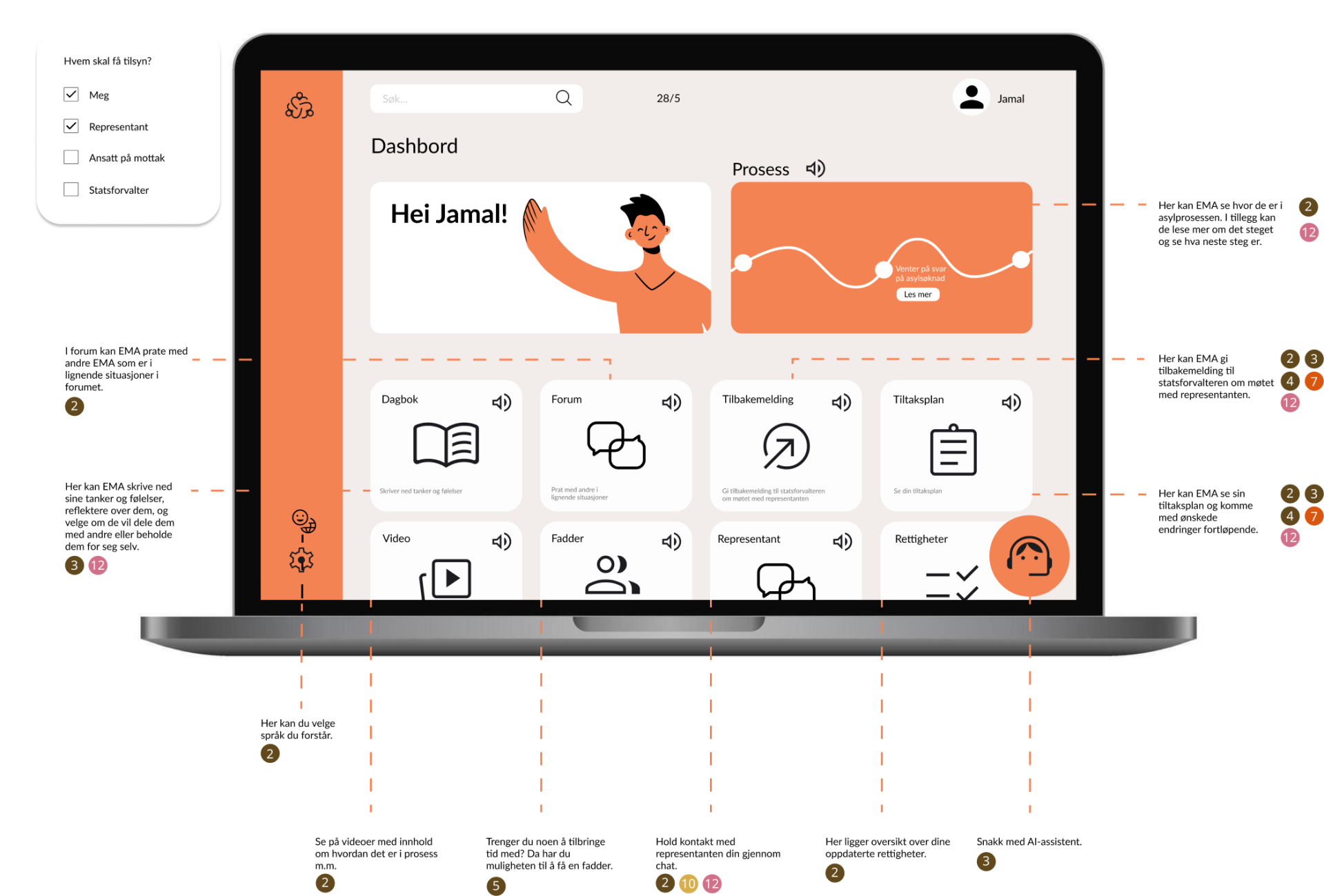
The purpose of this dashboard is to give unaccompanied minor asylum seekers (EMAs) better oversight of their asylum process, the ability to influence their stay at the reception centre, and access to features such as an action plan, information about their rights, and more.
Challenges
-
Limited information about rights, procedures, and available choices.
-
High uncertainty about what will happen in their case.
-
Inconsistent follow-up across different municipalities.
-
Difficult access to psychological support for trauma.
Representative
Purpose
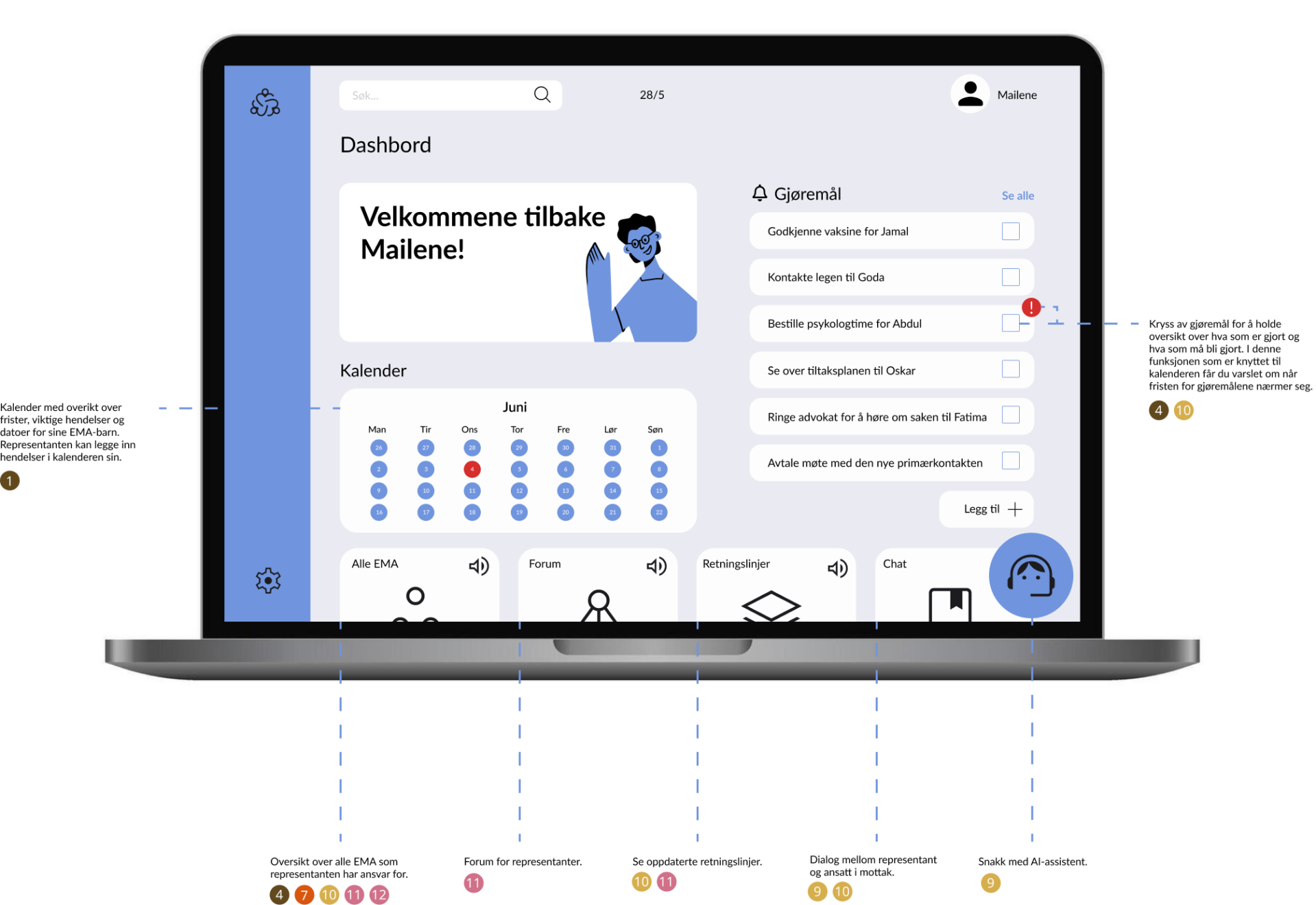
The purpose of the dashboard for the representative is to provide a clearer overview of the EMA, including access to guidelines. It serves as a tool to help the representative stay organized and manage processes and information efficiently.
Challenges
-
Heavy responsibility: Representatives are responsible for conveying all rights to the EMA.
-
Inconsistent practice: Children are treated differently depending on the representative.
-
High workload: A single representative may be responsible for up to 50 children.
-
Financial motivation: Some take on the role primarily for income.
-
Unclear guidelines: There are few clear frameworks defining the scope of the role.
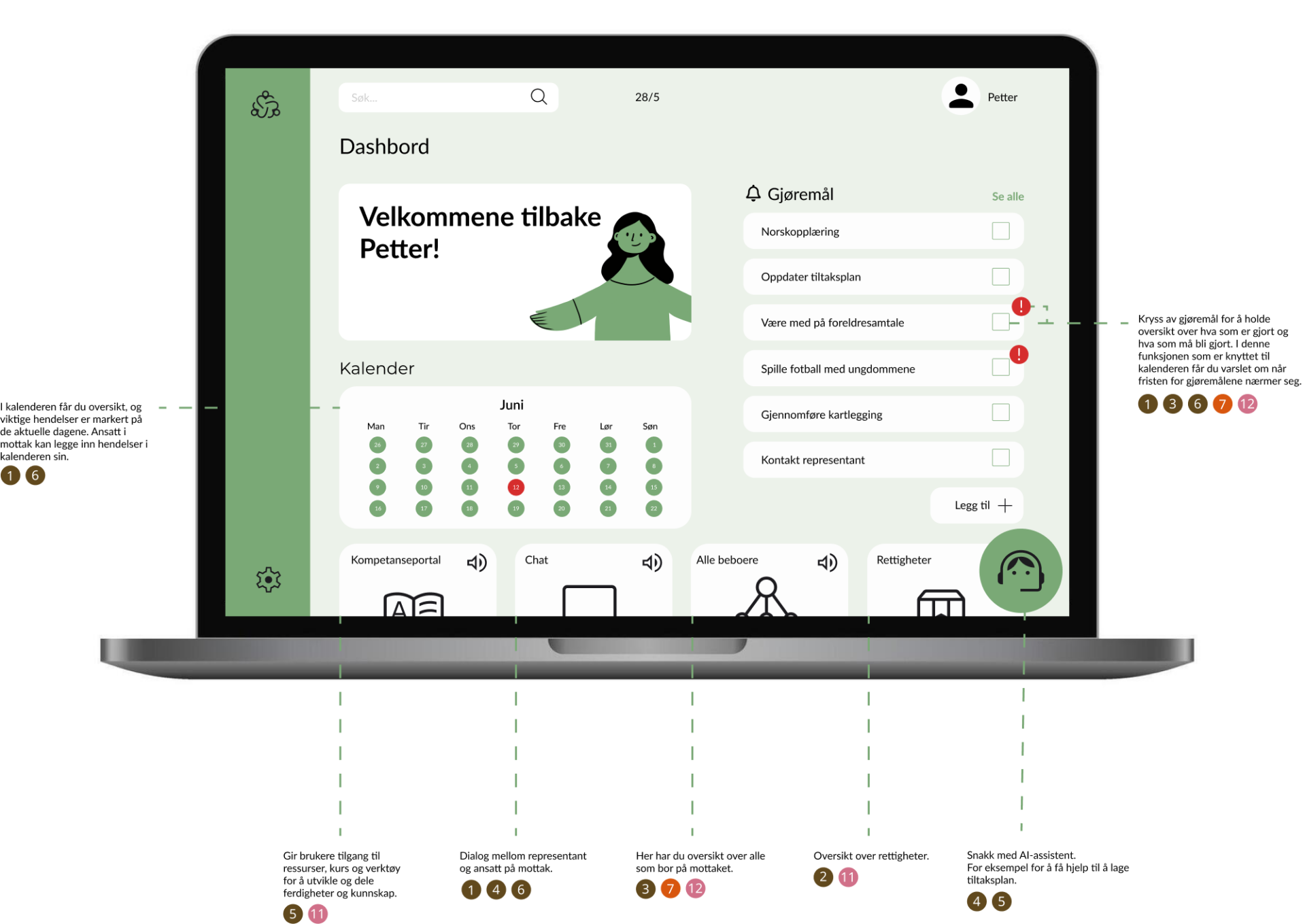
Employee at reception
Purpose
The purpose of the dashboard for reception centre staff is to provide a better overview of the children staying at the centre and to ensure that they receive the support and care they need.
Challenges
-
Too many tasks: Reception staff have responsibility for a wide range of duties.
-
Limited time: It can be difficult to provide adequate follow-up for each child.
-
Language and culture: Differences in language and background make communication challenging.
-
Incomplete follow-up: Guidelines are not always followed in practice.
-
Language barriers: Make it difficult to understand and be understood.
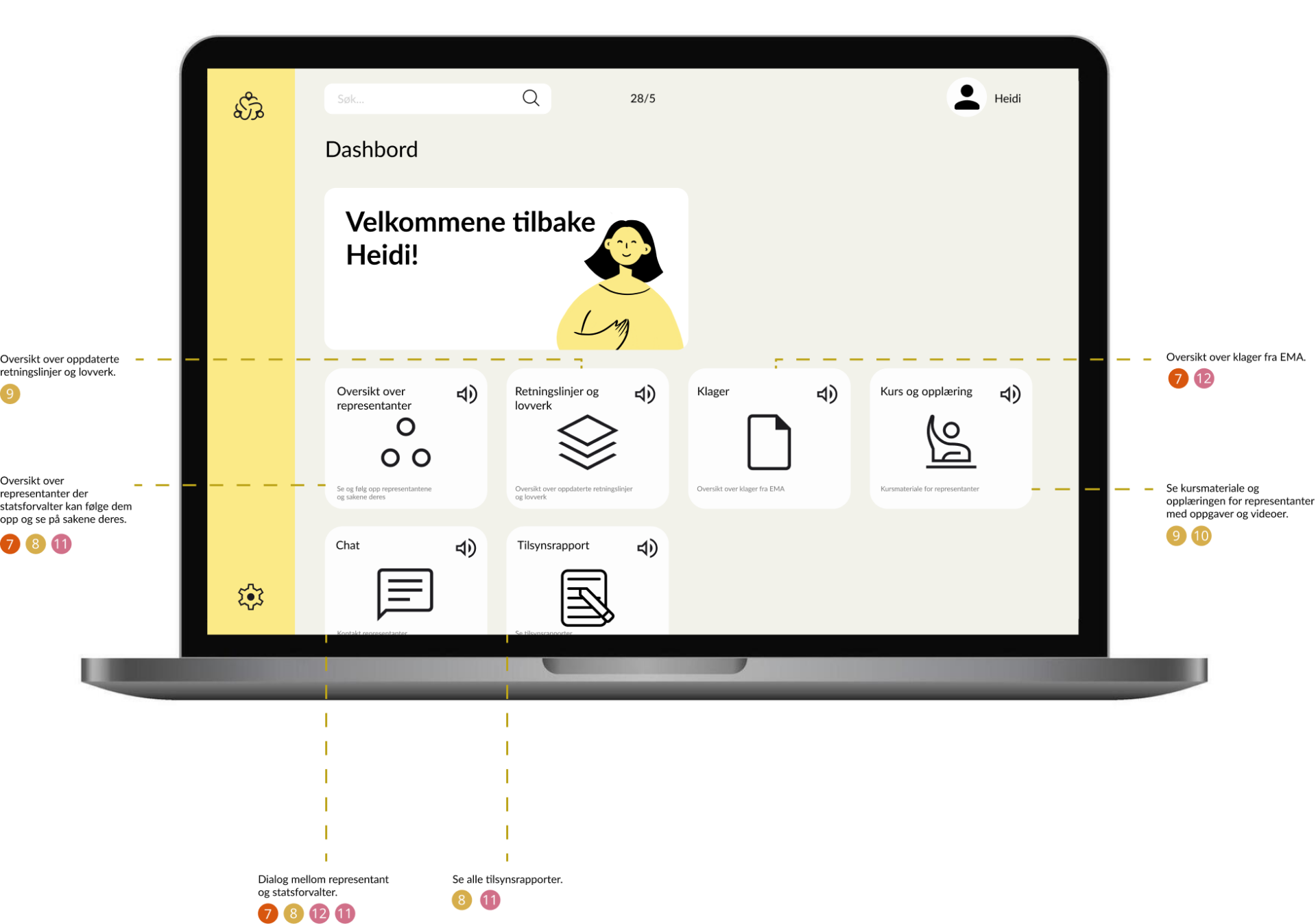
State administrator
Purpose
The purpose of the dashboard for the County Governor is to monitor representatives, verify their qualifications, and manage any complaints that are submitted.
Challenges
-
Poor communication between agencies.
-
Lack of oversight: No way to ensure that representatives are fulfilling their responsibilities.
-
Few qualified representatives: It is difficult to find competent representatives, especially when demand is high.


Address
Bjerregaards gate 21
Oslo, Norway
Socials